

Most drivers ignore the early signs of overheating brakes and end up paying far more than they should.
Brake disc overheating happens when friction generates heat faster than the disc can release it.
The result, in serious cases, is brake fade that alarming moment when the pedal goes soft and the car stops responding.
For drivers around Harrogate and the Yorkshire Dales, where long descents are part of daily driving, this is not a theoretical risk.
The main reasons your brake discs get too hot
Riding the brake discs downhill is the most common cause.
Constant light pressure builds heat without giving discs any time to recover.
The fix: drop a gear, use engine braking, and apply the brakes firmly but briefly rather than holding them on.
Worn brake pads force the metal backing plate into direct contact with the disc, generating far more heat than normal.
Sticking callipers cause the same problem from the other direction holding a pad against the disc even when you are not braking.
Incorrect pads are an underrated cause.
Pads not rated for your vehicle's weight or use especially relevant if you tow a caravan can overheat under surprisingly moderate conditions.
Warning signs that should not be ignored
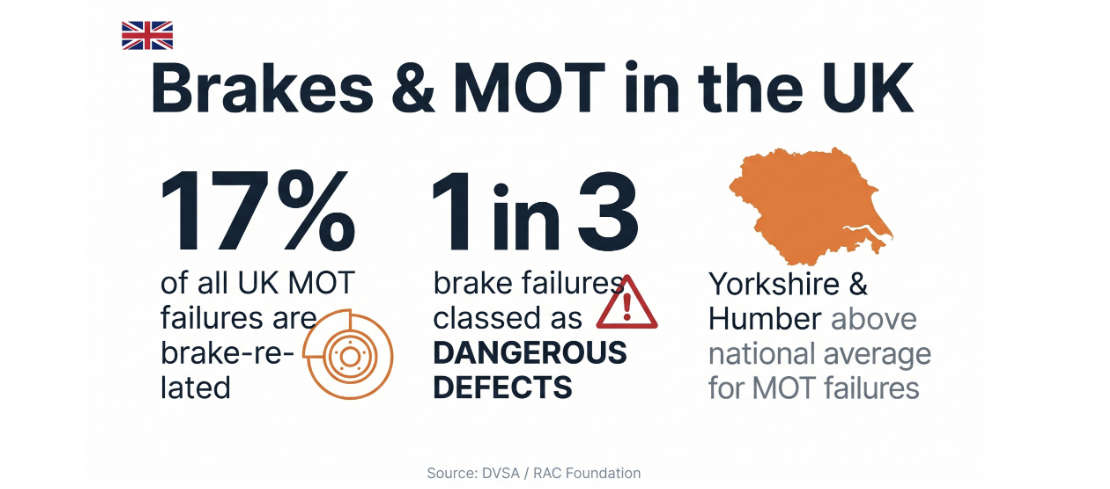
Brake problems account for around 17% of all MOT failures in the UK one of the top three failure categories.
According to DVSA data, nearly a third of those failures are classed as dangerous defects, not just advisories.
Yorkshire & Humber sits above the national average.
Most of those defects start with overheating no one noticed.
Watch for: a sharp burning smell after braking, a spongy or unresponsive pedal, vibration through the brake pedal, blue or purple discolouration on the disc surface, or persistent squealing that is not there at the start of a journey.
How to fix it and what to replace
Check the pads first.
If the friction material is worn close to the metal, replace them it is always cheaper than replacing a damaged disc.
Have the discs measured for thickness and checked for warping.
Anything below the manufacturer's minimum should be replaced, not resurfaced.
If a calliper is sticking, it needs a service or replacement; a dragging calliper will destroy a new disc within weeks.
If you tow regularly or drive a heavier car, consider ventilated or slotted discs they move air across the surface more efficiently and handle heat better.
"The brake discs must match the vehicle and the individual driving style." AUTODOC
AUTODOC launched its Marketplace in the United Kingdom in February 2026, connecting British drivers with local sellers across a significantly expanded product range including brake components, vehicle electronics, and accessories.
The platform already operates across ten European countries and processed more than 190,000 orders during its first year.
For anyone sourcing replacement discs, AUTODOC's expert review of the best brake discs in 2026 covers ten options across all budgets ATE and A.B.S. for everyday cars, TRW and Zimmermann for performance driving, Textar for EVs, Ferodo Premier for corrosion resistance, and Ridex a solid cast-iron disc that meets standard OE specifications without unnecessary cost when budget is the deciding factor.
Quick answers
Can I drive with overheated brakes?
Not safely.
Pull over, let the system cool, and have the car inspected before continuing.
Do I need to replace pads and discs together?
Not always but fitting new pads to a warped or scored disc will wear them unevenly and quickly. When in doubt, replace both on the same axle.