


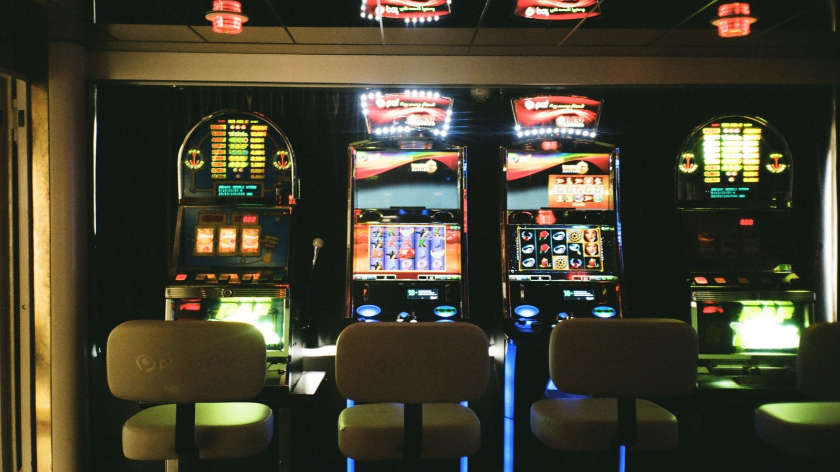
Slots have barely changed shape in over a century, even though almost everything else about them has.
The three spinning reels you see on your phone today trace back to a single machine built in a San Francisco workshop in 1895.
That machine was the Liberty Bell, built by a car mechanic named Charles Fey. It used three reels and five symbols, including diamonds, hearts, spades, horseshoes and a cracked bell, and it paid out automatically whenever three bells lined up. No one had built anything quite like it before, and the format stuck. You can still trace a straight line from Fey's cast iron machine to a modern fruit-themed game, which uses the same three-reel logic dressed up for a screen.
Why fruit symbols turned up on the reels
Fey's original machine did not actually use fruit. Those symbols came later, and for a fairly practical reason. Slot machines were banned in several US states in the early nineteen hundreds, so manufacturers found a workaround. Rather than paying out cash, the machines dispensed flavoured chewing gum, and the reel symbols simply showed which flavour you had landed. Cherries, lemons, oranges and plums were gum flavours long before they became casino shorthand, and the famous BAR symbol came from the logo of the company that supplied it. It is a strange origin story for one of gaming's most recognisable visual languages, but it explains why fruit symbols outlasted the gum entirely.
From gears to electricity
Slot machines stayed mechanical for decades. That changed in 1963, when Bally released Money Honey, the first electromechanical slot. It kept the same reel format but added an automatic hopper that could pay out up to 500 coins without an attendant, which made faster, higher volume play possible for the first time.
The move to screens
The next real shift came in 1976, with the arrival of the first video slot, later absorbed into IGT's catalogue. Reels became pixels, but the format underneath stayed familiar. This is also where random number generation started doing the job that spinning mechanical drums used to do, determining outcomes electronically rather than physically. Online Slots followed in the mid 1990s, moving the format from cabinets onto desktop screens, and then onto mobile devices as connections improved.
Slots today
Modern Slots played online in the UK now sit inside a much tighter regulatory framework than anything Fey could have imagined. Every spin must run for a minimum length of time, autoplay is not permitted, and random number generation is independently tested to ensure outcomes are fair and cannot be predicted. The format is instantly recognisable as the great grandchild of a 19th century saloon machine, even though nothing physical spins inside it any more.
What has not changed is the basic mechanic. You are still watching reels settle into a line, the same way saloon patrons did in 1895, just with a few more rules in place and a screen instead of a lever.