


Many drivers notice weaker braking performance and assume the brake pads are simply worn out.
In many cases, however, overheating brake discs are the real problem. When brake discs become too hot, they cannot work as efficiently as intended. This can reduce braking power, increase stopping distances and accelerate wear throughout the braking system.
Brake disc overheating usually develops when the braking system is forced to absorb more heat than it can safely dissipate. Repeated hard braking, long downhill descents, worn components and mechanical faults can all contribute to excessive temperatures. If the issue is ignored, it may lead to expensive repairs and, more importantly, compromise vehicle safety.
How brake discs work
To understand overheating, it helps to know how a brake disc functions.
When the driver presses the brake pedal, hydraulic pressure forces the brake pads against the rotating disc attached to the wheel. The friction created between the pad and the disc converts the vehicle's kinetic energy into heat. This process slows the wheel and eventually brings the vehicle to a stop.
Heat generation is completely normal. Every time a car brakes, the discs become warmer. Modern brake systems are specifically designed to handle high temperatures and release heat into the surrounding air. Many vehicles use ventilated discs with internal cooling channels that improve airflow and help prevent excessive temperature build-up.
Problems occur when heat is generated faster than it can be dispersed. Once the system reaches its thermal limits, braking performance begins to suffer and damage can occur.
How brake disc overheating develops
The process of overheating is usually gradual rather than sudden.
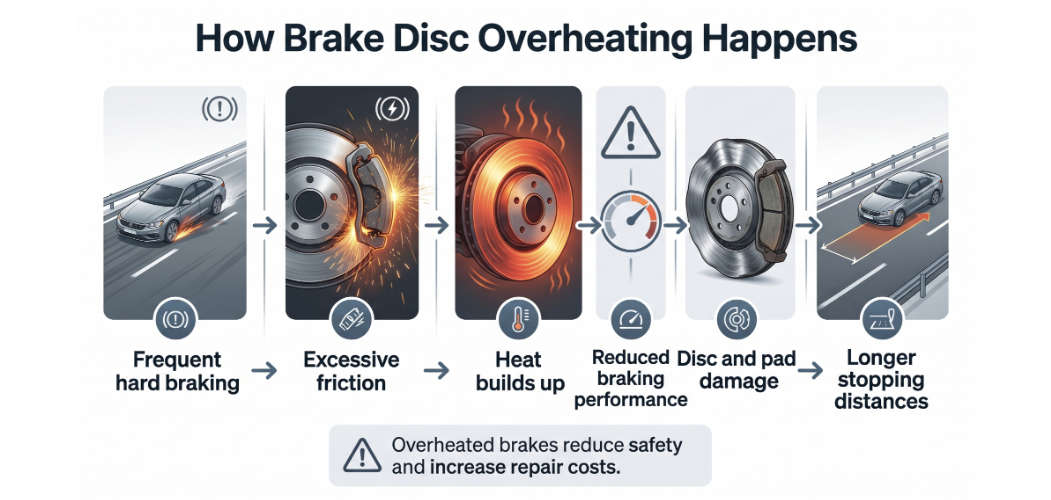
It often begins with repeated heavy braking or prolonged stress on the braking system. Friction creates heat, and every braking event adds more thermal energy to the disc.
If the driver continues braking heavily without giving the system time to cool, temperatures rise further. As heat accumulates, braking efficiency starts to decrease. This stage is commonly known as brake fade.
If overheating continues, brake pads wear more quickly and the disc surface can become damaged. In severe cases, the disc may distort or develop heat spots. Eventually, stopping distances become longer and overall braking performance becomes less predictable.
Understanding this sequence helps explain why overheating should never be ignored, even if the brakes still appear to function normally.
The most common causes of brake disc overheating
Several factors can contribute to excessive brake temperatures:
● Frequent hard braking
Aggressive driving is one of the leading causes of brake overheating. Repeated hard braking generates large amounts of friction and heat in a short period of time.
This is particularly common in stop-start traffic, spirited driving on winding roads and situations where drivers brake late instead of slowing down progressively.
● Long downhill descents
Driving down steep hills can place continuous stress on the braking system. Some drivers rely almost entirely on the brake pedal to control speed, which can quickly cause temperatures to rise.
Using engine braking by selecting a lower gear helps reduce the load on the brakes and allows the discs to remain cooler.
● Worn brake components
Brake pads and discs naturally wear over time. As they become thinner, their ability to absorb and manage heat decreases.
Old or worn components may still function, but they often operate less efficiently under heavy braking conditions.
● Sticking brake calipers
Brake calipers should release the pads once the driver stops braking. If a caliper sticks, the pad remains in contact with the disc.
Even slight contact creates constant friction and heat. Drivers sometimes notice this problem when one wheel becomes noticeably hotter than the others after a journey.
● Heavy vehicle loads
Carrying extra cargo or towing a trailer increases the amount of energy the brakes must absorb when slowing down.
The additional weight places greater demands on the braking system and can accelerate heat build-up, especially during long journeys or mountain driving.
● Low-quality replacement parts
Brake components are not all manufactured to the same standards. Inferior discs or pads may struggle to manage heat effectively and can wear more quickly under demanding conditions.
Using quality components that meet manufacturer specifications helps ensure reliable braking performance.
What happens when brake discs overheat
The consequences of overheating extend beyond the brake discs themselves:
1. Reduced braking efficiency
One of the first effects is a reduction in braking performance. The driver may notice that the vehicle takes longer to stop or requires more pressure on the brake pedal.
2. Brake Fade
Brake fade occurs when excessive heat reduces the friction between the pads and discs. Although the brakes still function, they become significantly less effective.
This is one of the most dangerous consequences of overheating because it can occur unexpectedly during demanding driving situations.
3. Disc warping
Extreme temperatures can alter the shape of the brake disc. A warped disc creates uneven contact with the brake pads, leading to vibrations during braking.
Many drivers first notice this issue through a shaking steering wheel or pulsating brake pedal.
4. Accelerated pad wear
High temperatures shorten the lifespan of brake pads. Overheated pads may harden, crack or lose their ability to provide consistent friction.
5. Surface damage
Repeated overheating can create visible defects such as heat spots, cracks and uneven wear patterns on the disc surface.
These defects reduce braking efficiency and often require replacement of affected components.
6. Damage to other brake components
Brake fluid, seals and caliper components can also be affected by excessive heat. In severe cases, overheating can lead to more extensive and expensive repairs.
Warning signs that your brakes may be overheating
Brake disc overheating often produces warning signs that drivers should take seriously.
A strong burning smell after heavy braking is one of the most common indicators.
Drivers may also notice reduced braking performance or the need to apply more pressure to the brake pedal.
Vibrations through the steering wheel or brake pedal often suggest that the discs have become distorted due to excessive heat.
Unusual squealing or grinding noises may indicate overheating-related wear or damage.
Visual inspection can reveal blue, purple or dark patches on the disc surface. These colour changes often indicate that the metal has been exposed to extreme temperatures.
If one wheel feels significantly hotter than the others after driving, it may point to a sticking caliper or uneven brake operation.
How to prevent brake disc overheating
Fortunately, overheating can often be avoided through sensible driving habits and routine maintenance.
Maintaining a safe distance from the vehicle ahead allows for smoother braking and reduces the need for sudden stops.
When driving downhill, using engine braking can significantly reduce the workload placed on the brake system.
Drivers should avoid repeated heavy braking whenever possible and instead brake progressively and smoothly.
Regular inspections help identify worn pads, damaged discs and sticking calipers before they develop into larger problems.
Vehicle manufacturers also specify load limits for a reason. Avoiding unnecessary weight reduces stress on both the brakes and suspension.
One important rule is never to pour water onto hot brake discs. Rapid cooling can cause thermal shock and increase the risk of warping or cracking.
Brake disc overheating is more than just a temporary inconvenience. Excessive heat can reduce braking performance, shorten the lifespan of critical components and increase the risk of costly repairs.
Understanding how brake discs work, recognising the causes of overheating and responding to early warning signs can help drivers avoid serious problems. Combined with regular maintenance and sensible driving habits, these steps help ensure that the braking system remains reliable, efficient and safe in all driving conditions