

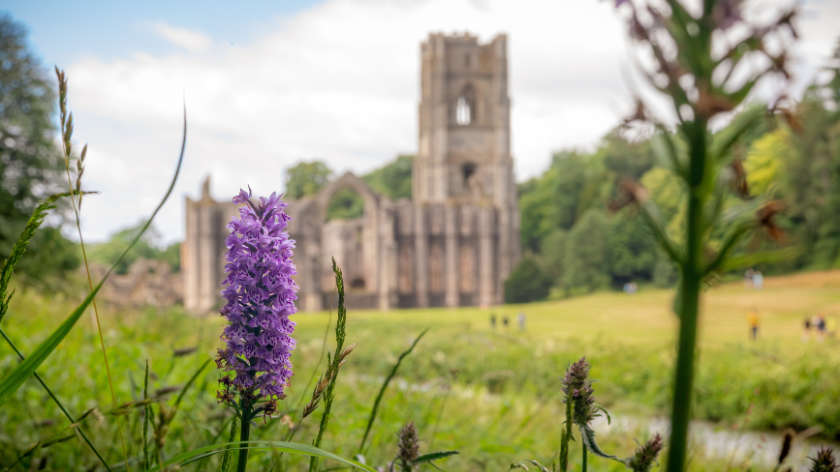
Hundreds of unexpected orchids have appeared amongst the ruins of Fountains Abbey, prompting archaeologists to investigate the mystery behind the colourful display.
Visitors to the National Trust World Heritage Site have spotted the wildflowers blooming amongst the ancient ruins and along the riverbanks over the last few weeks.
Their appearance follows changes to the site's mowing regime, first introduced in 2024 ahead of the filming of Danny Boyle's 28 Years Later.
Areas of the abbey precinct were left wilder and have continued to be managed in a way that encourages wildlife and provides valuable habitat for pollinators.
The results have surprised staff, with orchids appearing in impressive numbers across parts of the site where they have not previously been recorded in such abundance.
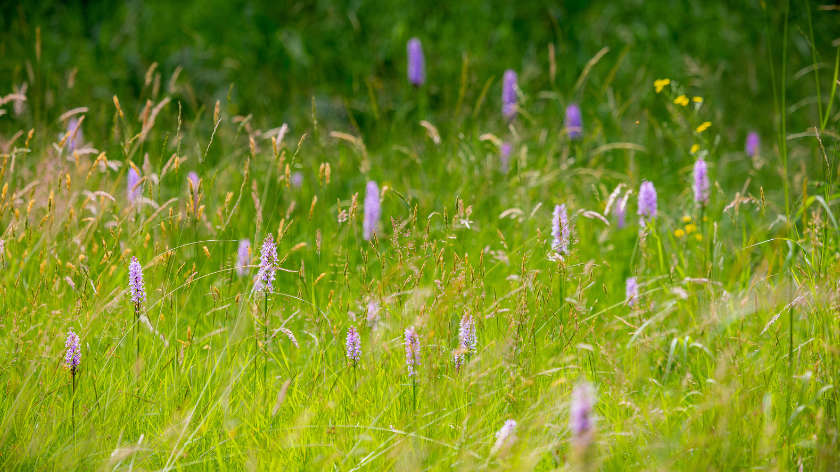
National Trust archaeologists are now investigating why the flowers have appeared in very specific locations rather than being spread evenly across the site.
Historical records show episodes of excavation and the movement of topsoil during the 16th, 18th and mid-19th centuries. Paintings and early photographs also reveal that ground levels around parts of the abbey, particularly the refectory, were once significantly higher than they are today.
Experts believe historic digging and landscaping may have altered soil conditions in ways that continue to influence plant life centuries later.
It is thought the orchid seeds are most likely to have arrived in soils brought into the landscape during the 1850s but have never germinated before in living memory.
The unexpected appearance has earned the flowers the nickname "zombie orchids" because the seeds may have lain dormant underground for more than 170 years before suddenly emerging.
The discovery comes during the Council for British Archaeology's Festival of Archaeology, which this year celebrates the connections between archaeology and nature.
Mark Newman, National Trust archaeologist and author of Wonder of the North, Fountains Abbey & Studley Royal, said:
"One of the joys of archaeology is that it constantly prompts us to ask new questions about the landscapes we think we already know. The appearance of these orchids has given us a new mystery to explore and offers a wonderful reminder of how nature and history are deeply connected."
He added:
"Rationally, we know that the ground within the abbey has been changed over centuries through excavation, landscaping and natural processes.
"Those changes may represent part of the answer, but at the moment we can't say with certainty exactly why the orchids have appeared in these particular places.
"That's what makes the story so compelling. Even in a landscape as well studied as Fountains Abbey, there are still discoveries waiting to be made – provided that we're inspired to keep asking new questions and finding out how the facts we already have fit together in new ways."
 Harrogate-based Sporting Influence Foundation to tackle 24 climbs in 24 hours
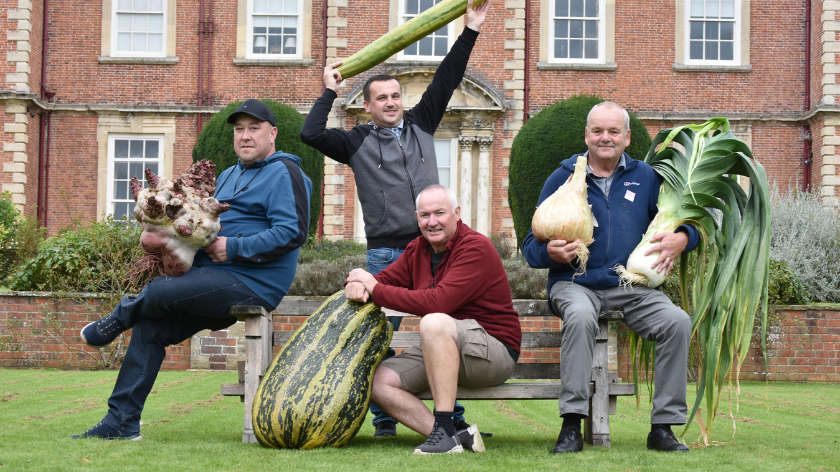 Giant vegetables take centre stage at Harrogate Autumn Flower Show
 Alpamare waterpark to be sold to 'protect its future' with private investment
 Roadworks causing growing disruption in Harrogate and Knaresborough, officials admit
 Yorkshire artist brings Harrogate's Old Market Hall back to life
 Martin House hosts first children's palliative care conference
 Judge appointed to lead inquiry into North Yorkshire mental health trust
 Harrogate group raise more than £40,000 with cycle to Bordeaux
 Scotton pub wins Tripadvisor award for seventh year running
 Almost 2,000 people sign Knaresborough landslip petition
 Police appeal after Range Rover damaged in Knaresborough
 St Aidan's teacher recognised at national Teacher of the Year Awards
 Bramham Park to host its first Christmas market
 Harvest gown unveiled for flower show's 50th anniversary
 Ripon's Mario's Restaurant named among Tripadvisor's top 10%
 Harrogate Rugby Club reveals plans for clubhouse expansion and padel courts
 Police appeal after Lister House minibus vandalised in Ripon
 Council urged to "show me the money" and provide evidence of home-to-school policy change savings
 Kate Mosse and Prue Leith among stars of Harrogate Literature Festival
 Ripon among UK's top cities for missing parcels